
Excavation Safety 1
You will need to review these two pdf files to pass this quiz. You may also need to reference the internet. A passing score is 80%.
(1) OSHA Trenching and Excavation Safety
(2) OSHA Trench Safety Tips Card
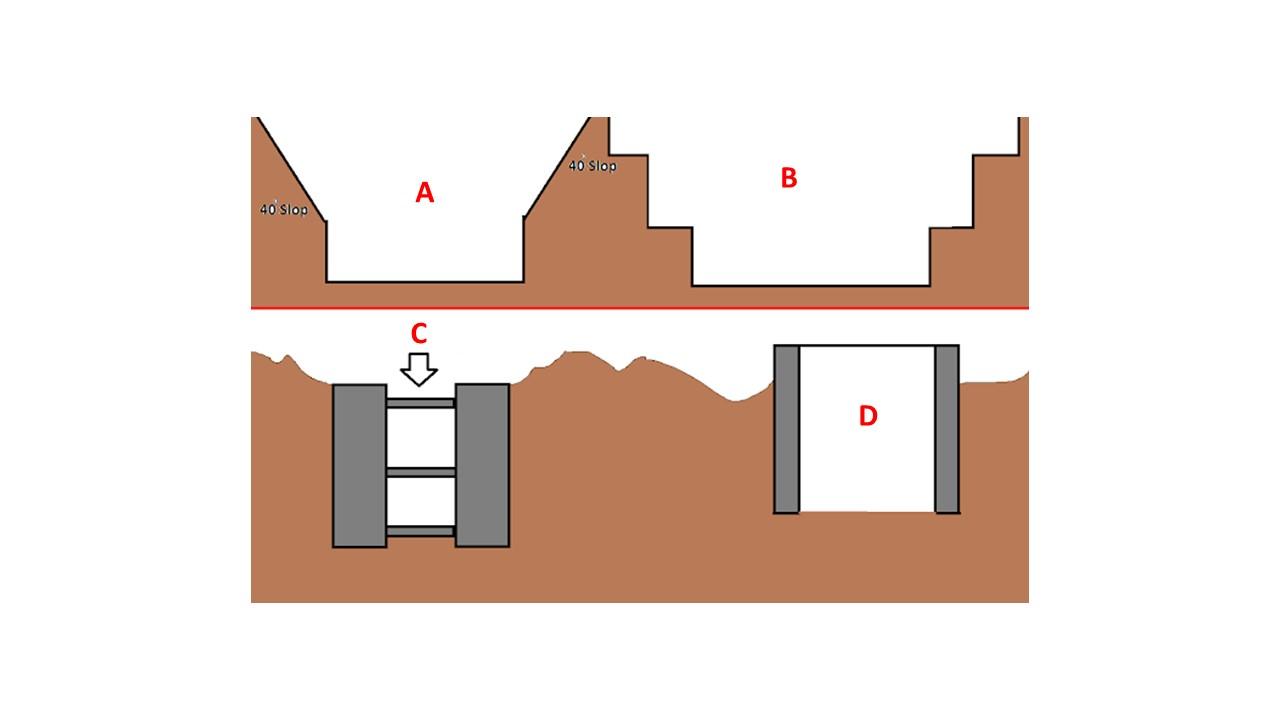
And study this text and graphic below for types of trench protective systems. These types of trench protective systems are needed when a trench is 5 feet or deeper unless the trench is made in stable rock.


Quiz Summary
0 of 25 Questions completed
Questions:
Information
You have already completed the quiz before. Hence you can not start it again.
Quiz is loading…
You must sign in or sign up to start the quiz.
You must first complete the following:
Results
Results
0 of 25 Questions answered correctly
Your time:
Time has elapsed
You have reached 0 of 0 point(s), (0)
Earned Point(s): 0 of 0, (0)
0 Essay(s) Pending (Possible Point(s): 0)
Categories
- Not categorized 0%
- 1
- 2
- 3
- 4
- 5
- 6
- 7
- 8
- 9
- 10
- 11
- 12
- 13
- 14
- 15
- 16
- 17
- 18
- 19
- 20
- 21
- 22
- 23
- 24
- 25
- Current
- Review
- Answered
- Correct
- Incorrect
-
Question 1 of 25
1. Question
Which of these two pictures shows an open cut excavation?
PICTURE A
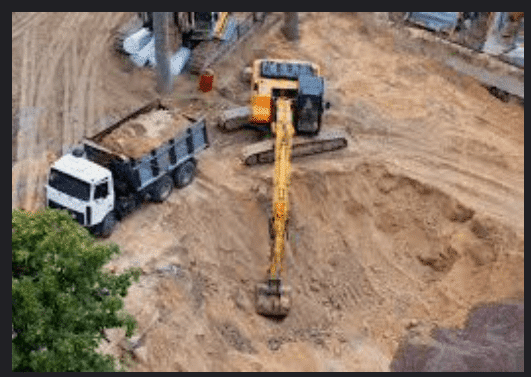
PICTURE B.
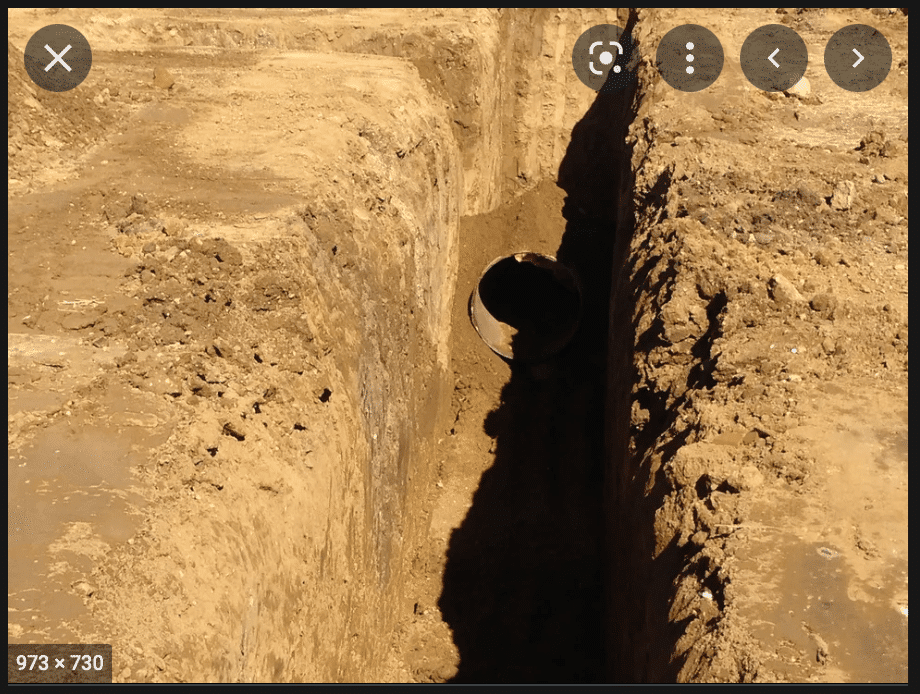 CorrectIncorrect
 -
Question 2 of 25
2. Question
Which one of these two pictures shows a trench?
PICTURE A
PICTURE B
CorrectIncorrect -
Question 3 of 25
3. Question
What are the dangers of trenching and excavations operations?
CorrectIncorrect -
Question 4 of 25
4. Question
OSHA standard 1926 is Safety and Health Regulations for Construction. With OSHA 1926, what subpart covers trenching and excavations?
CorrectIncorrect -
Question 5 of 25
5. Question
What are effective ways to determine soil classifications?
Choose ALL that are correct.
CorrectIncorrect -
Question 6 of 25
6. Question
Which of the following is a sure responsibility of the competent person (in excavation)?
CorrectIncorrect -
Question 7 of 25
7. Question
It typically takes utility locator services about 2-3 days to respond to a request. What number does the excavator need to call to locate underground utility lines during excavation work – anywhere in the US?
CorrectIncorrect -
Question 8 of 25
8. Question
Benching, Sloping, Shoring and Shielding are the most effective ways to protect workers from cave-ins. (True/False)
(Helpful hint: Remember these protective system names. You will need to know them later in this quiz.)
CorrectIncorrect -
Question 9 of 25
9. Question
At least how far from the edge of the excavations should materials or equipment be stored?
CorrectIncorrect -
Question 10 of 25
10. Question
During excavation, at what depth is atmospheric testing required where hazards could reasonably be expected? (Note: This means a multi-gas detector “sniffer” will need to be used.)
CorrectIncorrect -
Question 11 of 25
11. Question
Fill in the blanks.
-
Ladders, steps, ramps or other means of egress must be provided at feet or deeper and placed no more than feet apart laterally.
CorrectIncorrect -
-
Question 12 of 25
12. Question
How often should the excavation site be inspected for possible cave-ins, indications of failure in protective systems, hazardous atmospheres, and other hazardous conditions?
CorrectIncorrect -
Question 13 of 25
13. Question
High-visibility clothing is a requirement when exposed to vehicular traffic.
CorrectIncorrect -
Question 14 of 25
14. Question
Electrocution causes 1 out of every _____ construction related deaths
CorrectIncorrect -
Question 15 of 25
15. Question
At what depth is protection against cave-ins required?
CorrectIncorrect -
Question 16 of 25
16. Question
Which type of soil is the least stable?
CorrectIncorrect -
Question 17 of 25
17. Question
What degree of slope is required for type C soil?
CorrectIncorrect -
Question 18 of 25
18. Question
If soil classification cannot be determined, it must be assumed to be soil type _____ .
CorrectIncorrect -
Question 19 of 25
19. Question
How is fissuring defined?
CorrectIncorrect -
Question 20 of 25
20. Question
Which picture shows soil that is fissuring?
PICTURE A

PICTURE B
CorrectIncorrect -
Question 21 of 25
21. Question
Many experienced excavators believe setting spoil piles (dirt removed from the excavation) 2 feet back from the trench is not enough distance, especially because of the risk presented during fissuring. Many believe the spoils pile should be set back at a horizontal distance that is twice the depth of the trench. Under this scenario, if a trench is 4 feet deep, the spoil pile should be located ____ feet from the edge of the trench.
CorrectIncorrect -
Question 22 of 25
22. Question
Fill in the blanks using the graphic below.
-
A is an example of
B is an example of
C is an example of
D is an example of
CorrectIncorrect -
-
Question 23 of 25
23. Question
A trench box (see an example in photo below) is an example of which type of trench protection?
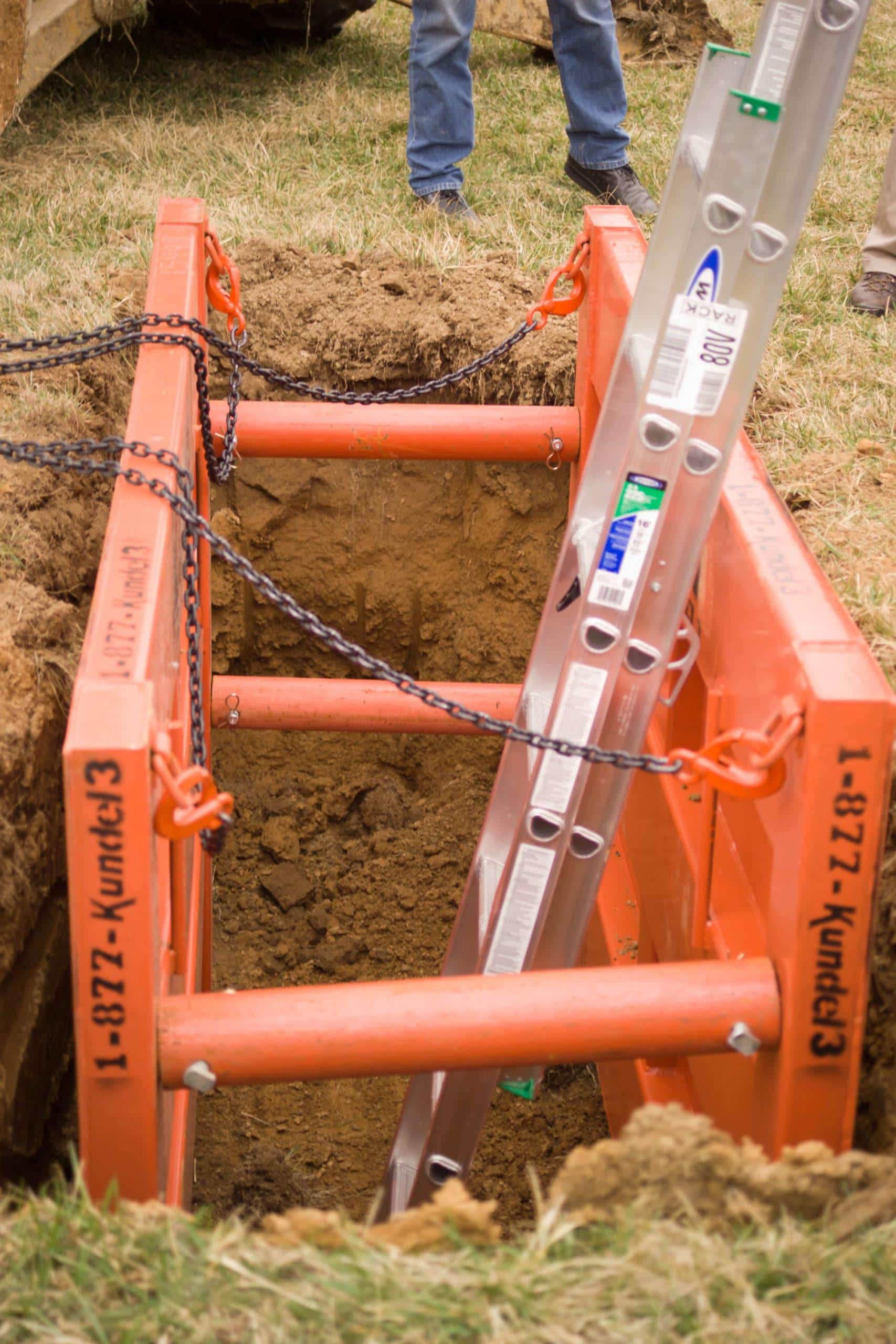
Image of the trench box in situ with chains still attached and the escape ladder in place CorrectIncorrect -
Question 24 of 25
24. Question
Fill in the blank.
-
In OSHA 1926, Subpart covers excavations.
CorrectIncorrect -
-
Question 25 of 25
25. Question
Fill in the blanks.
-
A trench that is feet or deeper will require ladders, steps, ramps, or other safe means of egress. When this egress is required, the means of egress must be located so as not to require workers to travel more than feet. When a trench is feet deep or deeper, a trench protective system must be used unless the trench is in stable rock.
CorrectIncorrect -


